


Rusha July 8, 2026 No Comments

SEO for Mental Health Therapists helping a private therapy practice improve Google rankings and attract more clients.

SEO for Mental Health Therapists is one of the most effective ways to attract qualified clients, increase online visibility, and grow a successful private practice. Today, most people begin their search for a therapist on Google because they want to compare professionals before scheduling an appointment. Without strong search rankings, your website may never reach the people actively looking for mental health support.

Instead of relying only on referrals or paid advertising, search engine optimization helps your practice generate consistent organic traffic. Over time, better rankings create more opportunities for potential clients to discover your services naturally. As trust grows, your website becomes a valuable source of consultation requests and long-term client relationships.

Whether you specialize in anxiety counseling, trauma therapy, family counseling, depression treatment, or relationship therapy, appearing in Google’s search results can make a significant difference. Moreover, a well-optimized website builds credibility while demonstrating your expertise before someone even contacts your practice.

At SEOExamine, we develop customized SEO strategies for therapists, psychologists, counselors, and behavioral health professionals. Through technical SEO, keyword research, local optimization, and content marketing, our team helps private practices improve rankings, increase qualified traffic, and generate sustainable growth.

💡 Did You Know? Most users never visit Google’s second page. Therefore, improving your rankings can dramatically increase consultation requests.


🌟 Why SEO for Mental Health Therapists Matters

Finding new therapy clients has changed dramatically during the last decade. Rather than depending solely on word-of-mouth referrals, many people now research therapists online before making a decision. Because online visibility influences trust, SEO has become an essential marketing strategy for every modern therapy practice.

📈 More People Search Online Before Choosing a Therapist

Before booking an appointment, potential clients usually compare several therapists online. Reviews, credentials, specialties, treatment approaches, and website quality all influence their final decision. Consequently, your digital presence often determines whether someone contacts your practice.

A professional website also creates a strong first impression. Clear service descriptions help visitors understand exactly how you can help. Meanwhile, simple navigation encourages users to continue exploring your pages instead of leaving your site.

Beyond design, useful information increases confidence. Educational articles, therapist profiles, and frequently asked questions answer common concerns before someone reaches out. As a result, visitors feel more comfortable taking the next step.

🎯 Organic Traffic Brings Qualified Clients

Unlike traditional advertising, SEO connects your practice with people who are actively searching for therapy services. Those visitors already have a genuine interest in counseling, making them much more likely to become clients.

Because search intent is stronger, organic traffic often produces higher conversion rates than general advertising campaigns. Another advantage is that optimized pages continue attracting visitors long after they are published. Even months later, quality content can still generate consultation requests without additional advertising costs.

⭐ Build Trust and Professional Authority

Appearing near the top of Google naturally increases credibility. Many users believe highly ranked websites are more trustworthy because search engines prioritize quality and relevance.

Helpful content strengthens that trust even further. Articles discussing anxiety, depression, stress management, trauma recovery, grief counseling, or relationship challenges demonstrate your knowledge while supporting potential clients.

In addition, publishing expert guidance consistently positions your practice as a reliable source of information. Eventually, readers begin recognizing your brand and returning whenever they need professional advice.

💰 Reduce Long-Term Marketing Costs

Paid advertisements certainly provide immediate exposure. However, visibility often disappears as soon as the advertising budget ends. SEO works differently because optimized content keeps generating traffic over the long term.

Rather than paying for every website visitor, your practice benefits from ongoing organic visibility. Consequently, marketing costs become more predictable while long-term returns continue improving.


🚀 Why Choose SEOExamine for SEO for Mental Health Therapists?

Growing a private therapy practice requires more than simply launching a website. Effective SEO combines technical expertise, valuable content, and continuous optimization to improve search performance.

Unlike agencies that use generic marketing packages, SEOExamine creates personalized SEO campaigns tailored specifically for therapists and mental health professionals. Every strategy focuses on increasing visibility, attracting qualified visitors, and improving appointment bookings.

💡 Customized SEO Strategies

Every therapy practice serves a different audience. Some professionals specialize in trauma therapy, whereas others focus on couples counseling, addiction recovery, child psychology, or anxiety treatment. Therefore, every SEO campaign should reflect those unique specialties.

Before implementing any recommendations, our specialists analyze competitors, evaluate keyword opportunities, and identify local search trends. This research allows us to build strategies designed specifically for your goals.

📊 Complete SEO Solutions

Achieving long-term SEO success requires more than a single optimization technique. Instead, effective results come from combining keyword research, technical SEO, content optimization, local SEO, and continuous website improvements. As these strategies work together, your website becomes more visible in Google Search and attracts more qualified clients.

At SEOExamine, we provide complete SEO solutions, including comprehensive SEO audits, keyword research, competitor analysis, technical SEO optimization, on-page SEO improvements, local SEO strategies, Google Business Profile optimization, SEO content writing, ethical white-hat link building, and monthly SEO reporting. Together, these services help mental health therapists improve search rankings, increase organic traffic, and grow their private practice consistently.

📈 Long-Term Organic Growth

Quick marketing wins rarely create lasting success. Sustainable growth comes from consistent optimization, high-quality content, and continuous performance improvements.

Instead of chasing short-term rankings, SEOExamine focuses on building lasting authority. Ultimately, stronger rankings generate qualified traffic month after month while reducing dependence on paid advertising.


🔍 How Search Engines Support SEO for Mental Health Therapists

Understanding how search engines rank websites helps explain why SEO matters. Every search begins with Google’s automated systems evaluating thousands of pages before displaying the most relevant results.

⚙️ Understanding Google’s Ranking Process

Every day, Google crawls and indexes millions of web pages across the internet. After collecting this information, its algorithms evaluate hundreds of ranking factors before displaying search results.

Content quality plays a major role in those rankings. Likewise, page speed, mobile responsiveness, website security, keyword relevance, and user experience all contribute to overall visibility.

Rather than rewarding websites that simply repeat keywords, Google prioritizes pages that genuinely help users solve problems.

📊 Ranking Factors That Matter

Several elements work together to improve search rankings. Valuable content answers user questions, whereas relevant keywords help Google understand each page’s topic.

Fast-loading websites improve user satisfaction. Secure HTTPS connections increase trust. Meanwhile, high-quality backlinks strengthen domain authority over time.

Together, these ranking signals help search engines determine which therapy websites deserve greater visibility.

🚀 How SEOExamine Optimizes Therapy Websites

Instead of relying on guesswork, SEOExamine follows proven SEO practices supported by data and ongoing analysis.

First, our specialists perform a comprehensive website audit to identify technical issues. Next, keyword research reveals valuable opportunities for growth. Afterwards, we optimize content, improve website structure, strengthen local SEO, and monitor performance continuously.

As rankings improve, qualified traffic increases naturally. Eventually, your website becomes a reliable source of consistent consultation requests without relying entirely on paid advertising.
🔑 Keyword Research for SEO for Mental Health Therapists

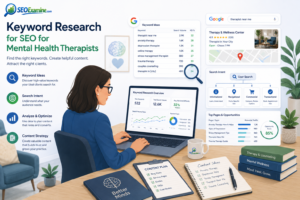
Keyword research strategy for SEO for Mental Health Therapists to improve Google search visibility.

Keyword research is the foundation of every successful SEO for Mental Health Therapists strategy. Without understanding what potential clients search for, your website may struggle to attract qualified traffic. By targeting the right search terms, you increase the chances of appearing in front of people who genuinely need mental health support.

Successful SEO goes beyond selecting popular keywords. Search intent, competition, and relevance also influence your ability to rank well. Therefore, every keyword should support both your business goals and your audience’s needs.

📌 📌 Why Keyword Research Matters for SEO for Mental Health Therapists

Before creating a new page or blog post, identify the phrases your ideal clients use on Google. Doing this ensures your content matches real search behavior instead of assumptions.

Research also uncovers opportunities that competitors may overlook. Besides improving rankings, carefully selected keywords help organize your website into clear service pages, blog articles, and location-specific content.

Ultimately, better keyword targeting leads to more qualified visitors and higher conversion rates.

🎯 Understand Search Intent for Mental Health Therapist SEO

People search Google for different reasons. Some visitors want educational information, while others are ready to contact a therapist immediately. Because these goals differ, your content should address every stage of the client’s journey.

For instance, someone searching “how to manage anxiety” expects practical advice. In contrast, a person searching “mental health therapist near me” is usually looking for professional services. Matching your content to these intentions improves user satisfaction and supports stronger SEO performance.

⭐ Focus Keyword Strategy for SEO for Mental Health Therapists

Throughout this guide, the primary keyword is SEO for Mental Health Therapists. Include it naturally in the page title, introduction, headings, image alt text, conclusion, and meta description. However, avoid forcing the keyword into every paragraph because natural writing always performs better.

Along with the primary keyword, use related terms such as:

  • Mental health therapist SEO
  • SEO for therapists
  • SEO for psychologists
  • Therapy website SEO
  • SEO for counselors
  • Mental health SEO
  • Local SEO for therapists
  • Private practice SEO

Using these variations helps search engines understand your topic while improving readability.

🛠️ Use Professional Keyword Research Tools

Choosing keywords becomes much easier with reliable SEO tools. Platforms such as Google Keyword Planner, Ahrefs, SEMrush, and Google Search Console provide valuable insights into search volume, competition, and keyword trends.

Rather than targeting only highly competitive phrases, balance your strategy with long-tail keywords that are easier to rank for. As competition decreases, your opportunities for organic growth often increase.

Meanwhile, competitor analysis reveals additional keyword opportunities that can strengthen your SEO strategy.

💬 Turn Client Questions into Content

Daily conversations with clients often reveal excellent content ideas. Questions about anxiety, depression, burnout, stress management, trauma recovery, relationships, and emotional wellness frequently reflect real Google searches.

Instead of answering those questions only during appointments, transform them into helpful blog posts. Educational content demonstrates your expertise while attracting visitors who are looking for trustworthy information.

Over time, each optimized article becomes another entry point to your website. Consequently, consistent publishing helps generate long-term organic traffic while strengthening your authority.

Want to see how keyword research works in another healthcare niche? Read our guide on SEO for Nutritionists to discover how targeted keywords help attract qualified organic traffic.


🧠 On-Page SEO for Mental Health Therapists

On-page SEO focuses on optimizing individual pages so they rank higher and provide a better user experience. Every improvement helps search engines understand your content while encouraging visitors to stay longer on your website.

Although technical SEO is important, on-page optimization remains one of the easiest ways to improve search visibility. Small changes often produce meaningful long-term results.

🏷️ Create SEO-Friendly Titles

Your page title is one of the strongest ranking signals. Rather than writing vague headlines, create descriptive titles that naturally include the focus keyword.

An engaging title also improves click-through rates because users immediately understand what the page offers. Furthermore, concise titles display better in Google Search results.

📝 Write Compelling Meta Descriptions

Meta descriptions influence whether users click your page even though they are not direct ranking factors. Instead of simply summarizing the content, explain the benefit readers will receive.

Including the focus keyword naturally makes the description more relevant. Likewise, ending with a clear call to action encourages additional clicks.

📚 Structure Content with Proper Headings

Organized content improves readability for both visitors and search engines. Begin with a single H1 heading before using logical H2 sections and supporting H3 headings.

Clear headings also help readers scan the page quickly. As a result, visitors can locate important information without reading every paragraph.

🔗 Strengthen Internal Linking

Internal links connect related pages throughout your website. Besides improving navigation, they help search engines crawl your content more efficiently.

For example, a blog about anxiety management can link to your anxiety therapy service page. Similarly, relationship counseling articles can direct readers to your appointment page or contact form.

Strategic internal linking keeps visitors engaged while strengthening your website’s overall SEO.

🖼️ Optimize Images for Better Rankings

Images make your content more engaging, but they should also support your SEO strategy. Before uploading any file, choose a descriptive filename instead of a generic one.

Next, write meaningful alt text that accurately describes the image. Whenever appropriate, include the focus keyword naturally without forcing it.

Finally, compress large images to improve loading speed because faster pages provide a better user experience.

✨ Improve User Experience

Excellent SEO depends on more than keywords. Visitors expect websites that are easy to read, simple to navigate, and fast to load.

Short paragraphs improve readability. Clear menus help users find important information. Meanwhile, noticeable calls to action encourage consultation requests.

Positive user experiences also increase the amount of time visitors spend on your website. Consequently, stronger engagement sends valuable quality signals to search engines.

📱 Mobile SEO for Mental Health Therapists

Today, most therapy-related searches happen on smartphones. Because mobile traffic continues growing, every page should display correctly across all screen sizes.

Responsive layouts improve usability. Touch-friendly buttons make navigation easier. At the same time, readable fonts reduce frustration for mobile users.

Google also prioritizes mobile-friendly websites in search results. Therefore, optimizing for mobile devices benefits both visitors and rankings.

🚀 Keep Improving Your On-Page SEO

SEO should never become a one-time project. Search algorithms evolve, competitors update their websites, and user behavior changes over time.

Regular website audits reveal new opportunities for improvement. Updating older pages keeps your content relevant. Likewise, monitoring keyword performance helps refine your strategy.

With ongoing optimization, your website can continue attracting qualified visitors and generating consistent consultation requests for years to come.


📍 Local SEO for Mental Health Therapists

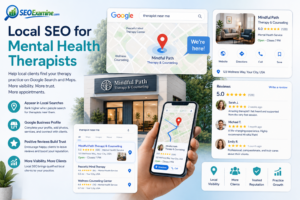
Local SEO for Mental Health Therapists using Google Business Profile and Google Maps to attract nearby clients.

Local SEO helps your practice connect with people searching for therapy services in your area. Since many clients prefer working with a nearby therapist, improving local visibility can significantly increase appointment requests. More importantly, appearing in local search results builds credibility before someone even visits your website.

🌍 Why Local SEO Matters

When someone searches for “mental health therapist near me” or “therapist in [city]”, Google displays businesses that best match the user’s location and search intent. Therefore, optimizing your practice for local searches makes it easier for nearby clients to find you.

Besides increasing visibility, local SEO helps your website compete against larger healthcare organizations. As your local presence grows, trust within your community also improves. Eventually, consistent local optimization can become one of your strongest sources of new clients.

📍 Google Business Profile for SEO for Mental Health Therapists

Your Google Business Profile is one of the most valuable local SEO tools available. Instead of leaving important details incomplete, make sure your business name, address, phone number, website, office hours, and therapy specialties remain accurate.

Adding professional photos creates a stronger first impression. Likewise, posting regular updates keeps your profile active and informative. Because Google values complete business profiles, these small improvements can positively influence local rankings.

You can create or optimize your listing through Google Business Profile to improve local visibility.

⭐ Encourage Genuine Client Reviews

Positive reviews help both potential clients and search engines trust your practice. Whenever appropriate and consistent with professional ethical guidelines, encourage satisfied clients to leave honest feedback.

Responding politely to reviews also demonstrates professionalism. Meanwhile, consistent engagement shows that you value client experiences. Over time, a healthy review profile strengthens both reputation and local search performance.


📖 Content Marketing for SEO for Mental Health Therapists

Content marketing plays a major role in SEO for Mental Health Therapists because every helpful article creates another opportunity to appear in Google Search. Rather than publishing random posts, focus on topics that answer real client questions.

✍️ Educational Content for SEO for Mental Health Therapists

Educational content builds trust while improving organic visibility. Articles covering anxiety, depression, trauma recovery, stress management, grief counseling, emotional wellness, and relationship challenges provide lasting value.

Instead of using complex medical language, explain concepts clearly so readers can easily understand them. Consequently, visitors stay longer on your website and become more confident in your expertise.

🎯 Match Content with Search Intent

Understanding search intent is essential for successful SEO. Some users need educational resources, whereas others want to schedule an appointment immediately.

Because each visitor has different goals, create content that supports every stage of the decision-making process. Informational blogs answer common questions, while service pages encourage consultation requests.

🌱 Create Evergreen Content

Evergreen content continues generating traffic long after publication. Topics such as stress management techniques, therapy benefits, mindfulness, self-care strategies, and communication skills remain useful throughout the year.

Updating older articles regularly keeps information accurate and relevant. Consequently, your website maintains stronger rankings while continuing to attract new visitors.


⚙️ Technical SEO Improves Website Performance

Technical SEO ensures your website performs efficiently for both users and search engines. Although visitors rarely notice these improvements directly, they benefit from faster loading speeds, better navigation, and a smoother browsing experience.

🚀 Improve Website Speed

Fast websites create positive user experiences and support stronger rankings. Compressing images, reducing unnecessary scripts, enabling browser caching, and choosing reliable hosting all contribute to improved performance.

Google also considers page speed when ranking websites. Therefore, optimizing loading times benefits both SEO and visitor satisfaction.

Google recommends following the SEO best practices available in Google Search Central to improve website performance, indexing, and search visibility.

🔒 Secure Your Website

Website security should always remain a priority. Installing an SSL certificate protects information shared through contact forms while enabling HTTPS encryption.

Secure websites inspire greater confidence among visitors. Additionally, Google favors websites that provide a safe browsing experience.

🧩 Help Search Engines Understand Your Website

Search engines need clear information to index your pages correctly. XML sitemaps, structured data, and proper indexing all make crawling more efficient.

Schema markup can also improve your appearance in search results by displaying additional information. As a result, your listings may attract more clicks than standard search results.


📱 Mobile SEO for Mental Health Therapists

Mobile devices now account for a large percentage of therapy-related searches. Because many people browse on smartphones, every page should provide a seamless mobile experience.

📲 Mobile Optimization for Mental Health Therapist SEO

Responsive web design automatically adjusts your website to different screen sizes. Easy navigation, readable text, and touch-friendly buttons improve usability for every visitor.

Mobile optimization also supports higher rankings because Google primarily evaluates the mobile version of your website.

📞 Contact Optimization for SEO for Mental Health Therapists

Visitors should never struggle to contact your practice. Click-to-call buttons, appointment forms, email links, WhatsApp options (if appropriate), and Google Maps integration simplify communication.

Removing unnecessary steps encourages more inquiries. Consequently, improving accessibility often increases conversion rates.


🔗 Link Building for SEO for Mental Health Therapists

Backlinks remain one of Google’s strongest ranking signals. High-quality links from trusted websites increase your authority while strengthening search visibility.

🌟 Link Building for Mental Health Therapist SEO

Instead of chasing hundreds of low-quality backlinks, focus on earning links from reputable healthcare organizations, universities, professional associations, wellness blogs, and local business directories.

Guest articles, expert interviews, podcasts, and community partnerships also provide valuable opportunities to build authority. Over time, ethical link building improves both credibility and rankings.


⚠️ Common SEO Mistakes Mental Health Therapists Should Avoid

Even a professionally designed therapy website can struggle to rank if common SEO mistakes are overlooked. Recognizing these issues early helps protect your visibility, improve user experience, and support long-term organic growth.

🚫 SEO Mistakes Mental Health Therapists Should Avoid

📄 Thin or Duplicate Content
Publishing pages with little value or repeating similar content makes it difficult for Google to understand which page should rank.

🔑 Keyword Stuffing
Adding the focus keyword too frequently creates an unnatural reading experience and may negatively affect your SEO performance.

📍 Ignoring Local SEO
Missing local optimization opportunities can prevent nearby clients from discovering your therapy practice through Google Search and Maps.

🏷️ Missing Meta Tags
Well-written title tags and meta descriptions improve click-through rates and help search engines understand each page.

🖼️ Large Image Files
Oversized images slow down loading speed, reducing both user satisfaction and search rankings.

📱 Poor Mobile Experience
Visitors expect websites to work perfectly on every device. Mobile-friendly pages encourage longer visits and more appointment requests.

🔗 Weak Internal Linking
Connecting related pages helps visitors explore your website while improving Google’s understanding of your content.

🌐 Low-Quality Backlinks
Links from unreliable websites can damage your authority instead of strengthening it. Focus on earning links from trusted sources.

📍 Outdated Google Business Profile
Keeping your business information current improves local visibility and helps potential clients contact you more easily.

🔄 Neglecting Older Content
Refreshing existing articles keeps information accurate and helps maintain strong search rankings over time.


🚀 Why Choose SEOExamine for SEO for Mental Health Therapists?

Growing a successful private practice requires a long-term SEO strategy backed by experience and continuous optimization. That’s exactly what SEOExamine delivers.

💼 What Makes SEOExamine Different?

Instead of offering generic SEO packages, we create customized strategies designed specifically for therapists, psychologists, counselors, and mental health professionals.

🎯 Personalized SEO Strategy
Every campaign is tailored to your services, target audience, competition, and business goals.

🔍 Advanced Keyword Research
We identify search terms your ideal clients actually use before building a content strategy around them.

⚙️ Complete Technical SEO
Website speed, Core Web Vitals, indexing, structured data, and technical performance are optimized for stronger rankings.

📍 Powerful Local SEO
Our team improves your visibility in Google Maps, local search results, and location-based searches.

✍️ High-Quality SEO Content
Every article and service page is written to satisfy both search engines and potential clients.

📊 Transparent Monthly Reporting
Easy-to-understand reports help you track keyword rankings, organic traffic, and business growth.

📈 Sustainable Long-Term Results
Rather than chasing short-term wins, we build lasting authority that continues generating qualified traffic.


 📌 SEO for Mental Health Therapists: Key Takeaways

🎯 Better Visibility

SEO for Mental Health Therapists helps your website appear when potential clients search for counseling and therapy services.

🔍 Smarter Keyword Targeting

Proper keyword research attracts visitors who are actively looking for mental health support.

📍 Stronger Local Presence

Local SEO increases your visibility in Google Search and Google Maps, resulting in more appointment requests.

📚 Valuable Content

Educational articles build trust, demonstrate expertise, and improve long-term organic traffic.

⚙️ Technical Excellence

Fast loading speeds, secure pages, and mobile-friendly design contribute to better rankings and improved user experience.

🌐 Higher Website Authority

Quality backlinks and ethical SEO practices strengthen your website’s credibility over time.

🚀 Sustainable Growth

SEOExamine combines every aspect of SEO into a customized strategy that helps mental health therapists grow their private practices consistently.


❓ Frequently Asked Questions (FAQs)

How long does SEO for Mental Health Therapists take to show results?

Most therapy websites begin seeing improvements within three to six months. However, competition, website quality, and consistent optimization all influence the timeline.

Is SEO better than paid advertising?

SEO provides sustainable organic traffic, while paid advertising delivers immediate visibility. Combining both strategies often produces the strongest long-term results.

Can local SEO help private therapy practices?

Yes. Local SEO increases your visibility in Google Search and Google Maps, making it easier for nearby clients to discover your services.

Why is keyword research important?

Keyword research identifies the phrases potential clients use when searching online. Consequently, creating relevant content helps attract qualified visitors.

Why should I choose SEOExamine?

SEOExamine specializes in customized SEO strategies that help mental health therapists improve rankings, generate qualified leads, and grow their private practices through sustainable organic search.


🚀 Conclusion: Grow Your Private Practice with SEO

SEO for Mental Health Therapists is more than a strategy for improving search rankings—it is an investment in the long-term growth of your practice. By combining keyword research, valuable content, local SEO, technical optimization, mobile-friendly design, and ethical link building, you create a website that consistently attracts qualified clients.

As competition continues to increase, maintaining a strong online presence becomes even more important. Therefore, businesses that invest in SEO today are better positioned for sustainable success tomorrow.

If you’re ready to increase visibility, generate more consultation requests, and grow your practice, SEOExamine can help. Our experienced SEO specialists develop customized strategies designed to deliver measurable results and long-term organic growth.

👉 Ready to grow your private practice? Contact SEOExamine today and start ranking higher on Google.

Write a comment

Your email address will not be published. Required fields are marked *