


SEO for senior care services is how home care agencies, assisted living communities, and elder care providers show up when local families search for help. Consequently, when a son in Ohio searches “home care for elderly parent near me” at 11 p.m., the agencies with strong search visibility are the ones he actually finds. Meanwhile, agencies without a search strategy stay invisible, no matter how good their caregivers are. Therefore, this guide breaks down what senior care SEO actually involves, why it matters more than most owners realize, and which specific tactics move the needle for home care and elder care leads.
What Is SEO for Senior Care Services?
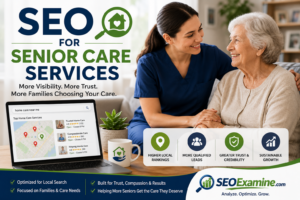
SEO for senior care services refers to the process of optimizing a home care or elder care website so it ranks higher in Google for the terms families actually type in. These terms include phrases like “home care near me,” “assisted living for elderly parent,” and “24 hour caregiver services.” Additionally, this process covers technical setup, content, local listings, and reputation signals that Google uses to decide which businesses to show first.
Unlike a generic local business, senior care providers serve people in an emotional, often urgent decision-making moment. As a result, search visibility directly affects whether a family finds a trustworthy option or defaults to whichever agency happens to advertise the most. Because of this, SEO becomes less about vanity rankings and more about connecting real families with real help at the right time.
In practice, this means senior care SEO blends several disciplines together. On-page content answers real caregiving questions, local listings confirm legitimacy, and technical performance keeps the whole experience fast and reliable. Together, these pieces work as a single system rather than isolated tasks, which is why a scattered, one-off approach rarely produces lasting results.
Why SEO Matters for Home Care and Elder Care Providers
Families rarely plan ahead for a parent’s care needs. Instead, most searches happen after a fall, a hospital discharge, or a sudden change in a loved one’s health. Because these searches happen under stress, the first few results a family sees carry outsized weight in their decision.
Furthermore, senior care is a trust-based purchase. Families are not choosing a product; they are choosing who enters their parent’s home. Consequently, a strong Google Business Profile, positive reviews, and a clear, informative website do more than attract clicks — they signal legitimacy before a single phone call happens. Without visibility, even the most compassionate care team can go unnoticed.
Additionally, competition among senior care providers continues to grow as the aging population expands. Consequently, agencies that rely only on referrals or word of mouth risk losing ground to competitors who also invest in search visibility. Over time, that gap tends to widen rather than close on its own, since search rankings reward consistent effort.
Why Local SEO Matters Specifically for Senior Care Agencies
Local SEO matters for senior care agencies because care is almost always delivered within a specific service radius. A family in Denver does not care about an agency based in Dallas, so ranking nationally is nearly irrelevant. Instead, agencies need to dominate the map pack and local organic results for their actual coverage area.
Local intent searches — phrases containing “near me,” a city name, or a neighborhood — convert at a much higher rate than broad informational searches. Therefore, optimizing for local senior care SEO matters more for this industry than almost any other content strategy, especially as the population of adults needing care continues to grow, according to data from the National Institute on Aging. Location pages, service-area pages, and consistent business citations all reinforce this local relevance to search engines.
15 Practical Tactics to Improve SEO for Senior Care Services
1. Claim and Optimize Your Google Business Profile
Start with a fully completed Google Business Profile, since this listing often appears before your actual website in search results. Add accurate hours, service areas, photos of your team, and every care service you offer. Afterward, keep this profile updated whenever your hours or services change.
2. Do Keyword Research for Senior Care Searches
Research the exact phrases families use, such as “in-home elder care,” “companion care near me,” and “dementia care services.” Then, build your website content around these specific terms rather than generic industry language. This step ensures your pages match real search intent instead of internal company terminology.
3. Build Dedicated Service Pages
Create a separate page for each core offering — personal care, respite care, dementia care, and skilled nursing support. Each page should target one primary keyphrase and answer the questions a family would have about that specific service. Consequently, this structure helps both users and search engines understand exactly what you provide.
Each service page should also include practical details, such as typical caregiver qualifications, scheduling flexibility, and how the service differs from similar offerings. Specific, useful detail like this keeps visitors engaged longer and gives search engines more context about the page’s true relevance.
4. Create Location Pages for Every Service Area
If your agency serves multiple cities or counties, build a unique page for each area rather than one generic “service area” page. Include local landmarks, area-specific resources, and testimonials from clients in that region when possible. This approach strengthens your relevance for city-specific senior care SEO searches.
5. Target “Near Me” and Urgent-Need Searches
Many families search under pressure, using phrases like “urgent home care near me” or “same day caregiver.” Because of this, your homepage and service pages should clearly state your response time and availability. Fast, visible answers to urgent-need searches can be the deciding factor in whether a family calls.
6. Publish Helpful, Educational Content
Write blog posts and guides that answer real caregiving questions, such as signs it’s time for home care or how to talk to a parent about accepting help. Educational content builds trust and naturally attracts organic search traffic over time. Additionally, this content gives you material to share on social media and in email newsletters.
7. Build a Detailed FAQ Section
Address common concerns directly, including cost questions, insurance and long-term care coverage, and caregiver screening processes. FAQ content tends to rank well for question-based searches and voice search queries. Moreover, it reduces friction for families who are still deciding whether to reach out.
8. Optimize for Mobile Users
Most senior care searches happen on a phone, often while someone is at a hospital or a parent’s home. Therefore, your site needs fast load times, large tap targets, and a clearly visible phone number on every page. A slow or cluttered mobile site will lose leads before they ever reach your contact form.
9. Strengthen Technical SEO Foundations
Behind the scenes, your site needs clean URL structures, proper heading tags, and a working XML sitemap submitted through Google Search Central. These technical elements help search engines crawl and index your pages correctly. Without this foundation, even great content can struggle to rank.
Broken links, duplicate title tags, and missing meta descriptions also quietly limit performance, even on otherwise well-written pages. A periodic technical review helps catch these issues before they accumulate into a larger, harder-to-fix problem.
10. Improve Page Speed
Compress images, minimize unnecessary scripts, and choose reliable hosting to keep load times low. A one or two second delay can meaningfully increase the number of visitors who leave before your page finishes loading. Because urgency drives many senior care searches, speed directly affects lead volume.
11. Generate and Respond to Reviews
Ask satisfied families for reviews on Google, and respond to every review, positive or negative, with professionalism and care. Review volume and recency both influence local rankings, and review content also reassures hesitant families. Over time, a steady stream of authentic reviews becomes one of your strongest trust signals, alongside industry credibility markers such as membership in the National Association for Home Care & Hospice.
12. Earn Local Backlinks
Build relationships with local senior centers, hospitals, physical therapy clinics, and community organizations that might link to your site. Backlinks from relevant, local sources tell search engines your agency is a recognized part of the community. Guest posts, sponsorships, and local directory listings all support this effort.
13. Match Content to Search Intent
Not every search has the same intent — some families want general information, while others are ready to call today. Structure your content so informational pages educate and service pages convert, with clear calls to action on each. This distinction keeps visitors moving toward the next step instead of leaving confused.
14. Use Internal Linking Strategically
Link related pages together, such as connecting a blog post about dementia symptoms to your dedicated dementia care service page. Internal links help visitors find relevant information and help search engines understand your site’s structure. As a result, well-placed internal links can improve both user experience and rankings.
15. Track Metrics and Refine Your Strategy
Monitor rankings, organic traffic, phone calls, and form submissions on a monthly basis. Then, use this data to identify which pages and keywords generate the most qualified leads. Ongoing measurement turns SEO from a one-time project into a continuously improving system.
Common Mistakes Senior Care Providers Make with SEO
1. Ignoring the Google Business Profile
Many agencies claim their listing once and never update it again. Outdated hours or missing photos quietly push potential clients toward competitors with more complete profiles.
2. Writing Generic, Non-Specific Content
Pages that only say “we provide quality care” without specifics fail to match what families are actually searching for. Specificity about services, conditions supported, and coverage areas performs far better.
3. Skipping Location Pages
Agencies serving several counties often rely on a single generic page instead of building out each service area. This limits visibility in the individual cities and neighborhoods families search from.
4. Neglecting Mobile Performance
A desktop-focused website that loads slowly or displays awkwardly on phones loses a significant share of urgent searches. Since most families search on mobile, this mistake carries real cost.
5. Overlooking Reviews
Some agencies never ask happy families for reviews, leaving their profile thin compared to competitors. Thin review counts can make an otherwise excellent agency look less established.
6. Using Duplicate Content Across Pages
Copying the same paragraph across multiple location or service pages confuses search engines about which page should rank. Unique, tailored content for each page avoids this problem entirely.
7. Forgetting Clear Calls to Action
Pages without an obvious next step — a phone number, a contact form, a scheduling link — leave interested visitors unsure how to proceed. Every page should make the next step obvious.
8. Treating SEO as a One-Time Project
Search algorithms and competitor strategies change constantly, so a website optimized once and left alone will gradually lose ground. Ongoing attention keeps rankings stable over time.
How SEOExamine Can Help Senior Care Agencies Grow
SEOExamine works specifically with local service businesses that need consistent, qualified leads rather than generic traffic. For senior care providers, that means building a strategy around the real searches families run during a stressful, time-sensitive decision. Below is how our local SEO services support agencies at every stage.
SEO Audit
We start with a full SEO audit covering technical health, content gaps, and current search visibility. This audit identifies exactly where an agency is losing potential leads to competitors.
Local SEO
Our team builds out location-specific pages, citation consistency, and local search signals designed to strengthen visibility across every service area an agency covers.
Google Business Profile Optimization
We fully optimize and maintain each client’s Google Business Profile, including photos, service categories, and regular posts that keep the listing active.
Keyword Research
We identify the exact terms families use when searching for senior care, then prioritize the ones with the strongest lead potential for each specific agency.
Content Strategy
Our writers develop educational and service content built around real caregiving questions, positioning each client as a trustworthy local resource.
Technical SEO
We handle site speed, mobile performance, structured data, and crawlability issues that often go unnoticed but quietly limit rankings.
Competitor Analysis
We review what competing agencies rank for locally, then identify gaps a client can realistically capture with the right content and links.
Local Link Building
We pursue relevant local partnerships and citations that strengthen an agency’s authority within its actual service community.
Conversion Optimization
We refine calls to action, contact forms, and page layout so more of the traffic we generate turns into actual phone calls and inquiries.
Reporting
Clients receive clear monthly reporting on rankings, traffic, and lead activity, so progress stays visible and measurable throughout the engagement. Learn more on our contact page or explore our case studies from similar service-based clients.
Step-by-Step Senior Care SEO Strategy Timeline
Month 1: Technical audit, Google Business Profile cleanup, and keyword research lay the groundwork for everything that follows.
Month 2: Service and location pages get built or rewritten, while foundational content publishing begins.
Month 3: Local link building, review generation campaigns, and additional content publishing ramp up.
Month 4 and beyond: Ongoing optimization, reporting, and refinement based on real ranking and lead data continue month over month.
What Does SEO for Senior Care Services Cost?
Cost varies based on several factors, including the number of service areas, the current state of a website, and the competitiveness of local search results. Additionally, agencies competing in dense metro areas typically require more content and link-building work than those in smaller markets. Because every agency’s starting point differs, pricing should always follow a custom audit rather than a flat, one-size-fits-all quote.
Other factors that influence cost include the number of service lines an agency offers, how outdated the existing website is, and whether previous SEO work needs to be corrected before new work begins. As a result, two agencies in the same city can have very different investment needs depending on where they currently stand. It’s worth noting that SEO investment is separate from the cost of care itself, which families can research further through resources like the Medicare.gov home health coverage guide.
How Long Does It Take to See Results?
Most agencies begin seeing early movement in rankings within three to four months, though timelines vary by market competitiveness and starting website condition. Meanwhile, foundational improvements like Google Business Profile optimization can produce visibility gains faster than organic content rankings. Sustainable, long-term results typically build over six to twelve months of consistent effort, and no reputable agency can guarantee exact rankings or timelines.
Final Thoughts on SEO for Senior Care Services
SEO for senior care services is not optional in a market where families search online before making one of the most emotional decisions of their lives. Instead, it is the mechanism that connects capable, caring agencies with the families who need them most. When done well, local SEO turns a website from a digital brochure into a consistent source of qualified home care and elder care leads.
Agencies that treat SEO as an ongoing part of their marketing, rather than a one-time project, tend to build the strongest, most durable results. Ultimately, consistent visibility today becomes the foundation for the referrals and reputation an agency relies on years down the road.
Frequently Asked Questions About Senior Care SEO
What is the difference between SEO and paid ads for senior care agencies?
SEO builds long-term, organic visibility that continues generating leads without an ongoing cost per click. Paid ads, on the other hand, deliver immediate visibility but stop producing traffic the moment the budget runs out.
How important is Google Business Profile for a home care agency?
It is often the single most important local SEO asset, since it frequently appears above organic results for “near me” searches. A complete, active profile can significantly affect call volume.
Do small, independent senior care agencies need SEO too?
Yes, smaller agencies often benefit the most, since strong local SEO can help them compete directly against larger, better-funded competitors in the same service area.
Can senior care SEO help with staff recruitment as well?
Yes, many agencies also rank career pages for caregiver job searches, which can support recruitment alongside client-facing lead generation.
How many location pages should a multi-city agency create?
Generally, one unique, well-developed page per distinct city or county served performs better than a single combined service-area page.
What role do reviews play in senior care SEO?
Reviews influence both local rankings and a family’s trust in the agency, making review generation an ongoing priority rather than a one-time task.
Is blog content actually worth the investment for a care agency?
Yes, educational blog content attracts organic traffic, builds trust with hesitant families, and supports internal linking to core service pages.
How often should a senior care website be updated for SEO?
Core service and location pages should be reviewed periodically, while blog content and the Google Business Profile benefit from more frequent updates.
Does SEO replace the need for referrals from hospitals and physicians?
No, SEO works alongside referral relationships rather than replacing them, since many families still research an agency online even after receiving a referral.
Ready to Grow Your Senior Care Leads?
A strong SEO strategy helps the right families find your agency at the moment they need care most. If you’re ready to improve your visibility, reach out through our contact page to start with a full local SEO audit.